
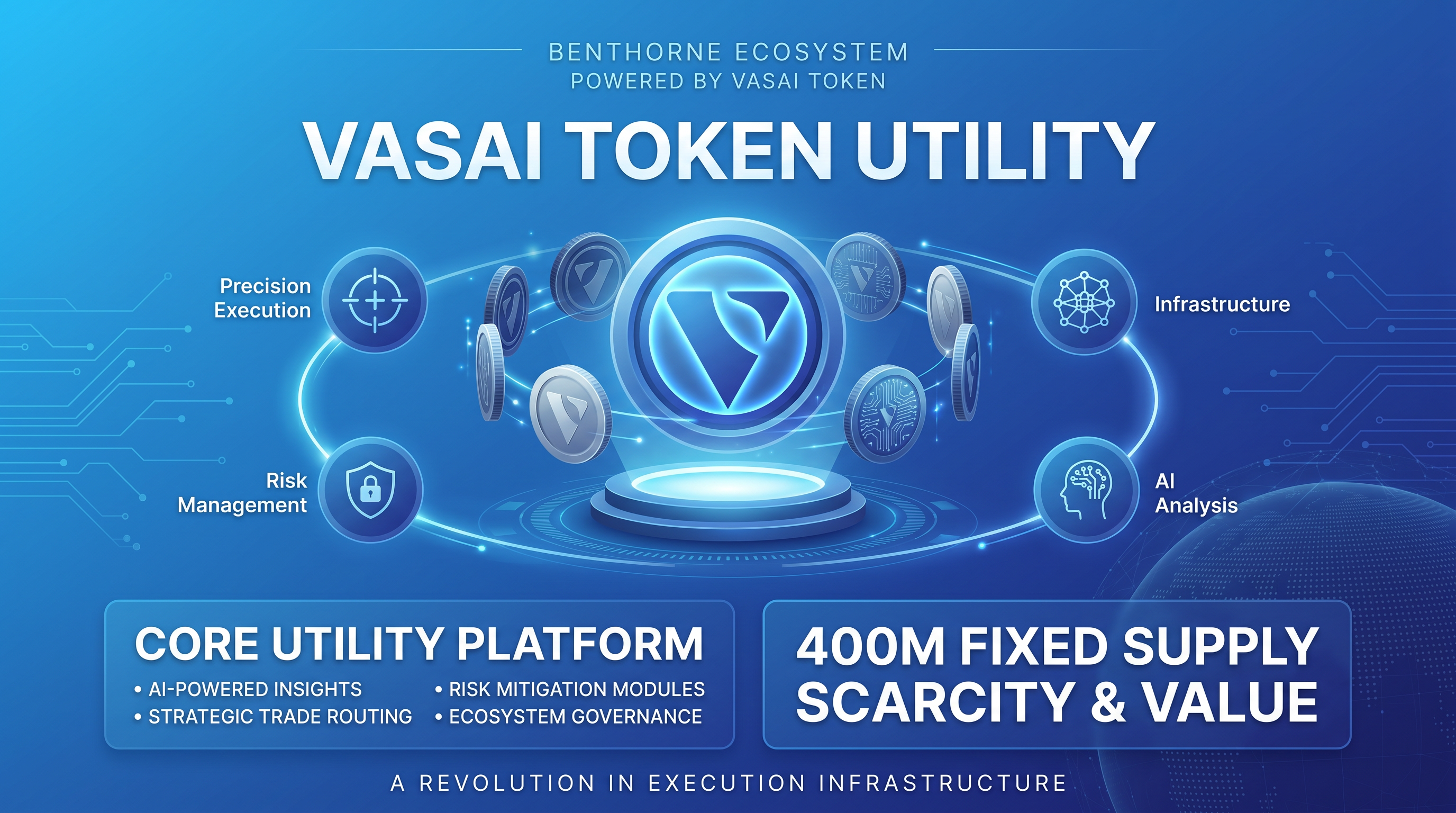
Why utility communication matters for VASAI Token
VASAI Token needs a clear utility communication framework because modern digital asset audiences expect more than a name, logo, and short slogan. They want to understand what a token represents, how its supply narrative is presented, what kind of ecosystem language surrounds it, and why the project has chosen a specific public identity. Utility is not only a technical concept. It is also a communication challenge. If a token cannot explain its purpose clearly, users may struggle to understand how it fits into the broader digital capital environment.
For VASAI Token, utility should be explained through simple but structured ideas. The project can connect token utility with intelligence access, platform identity, global market education, ecosystem visibility, and digital capital storytelling. This does not require overcomplicated language. A professional website should make the message easier to understand, not harder. The purpose of the VASAI Token website is to create that organized experience through rich pages, consistent design, long-form articles, FAQ content, and clear contact channels.
A token utility framework also helps the project avoid vague presentation. Many digital asset websites use generic words such as innovation, future, community, and finance without explaining how those words connect to the user experience. VASAI Token can be stronger by using a framework that divides the message into understandable areas: supply, access, intelligence, education, visibility, and ecosystem positioning.
The key point is that VASAI Token utility should be presented as a clear communication system. Visitors should understand the project’s purpose, visual direction, and digital asset narrative without needing to guess what the website is trying to say.
Defining utility in a user-friendly way
Utility is often misunderstood because it can mean different things in different digital asset contexts. In some projects, utility refers to access rights. In others, it refers to governance, platform usage, rewards, data services, or ecosystem participation. For VASAI Token, the website should avoid making unsupported technical claims and instead focus on the communication role of utility: explaining how the token identity can be understood within a broader intelligence-driven brand environment.
A user-friendly definition of utility begins with clarity. VASAI Token can frame utility as the bridge between the brand’s AI intelligence narrative and the visitor’s understanding of the ecosystem. The token becomes part of a digital capital story where users encounter structured information, global insights, visual dashboards, and educational pages. Even before a visitor studies deeper technical details, the website should provide a practical sense of what VASAI Token is trying to represent.
This is why the Insights blog system matters. Utility is not explained well in one sentence. It needs context, examples, and supporting sections. Article pages allow VASAI Token to discuss different angles without overcrowding the homepage. The homepage can introduce the idea, the About page can summarize the project identity, and the article pages can explore deeper themes one by one.
Supply narrative and digital asset confidence
Supply communication is one of the most sensitive parts of token presentation. Users often look for information about supply because it helps them understand scarcity, distribution expectations, and the way a project frames its digital asset identity. On the VASAI Token homepage, supply is presented as a narrative point rather than a heavy technical section. This keeps the site clean while still giving users a clear signal that token structure is part of the project’s communication.
A strong supply narrative does not need to be exaggerated. It should be readable, consistent, and placed in the right context. VASAI Token should present supply-related information as part of a larger ecosystem story. The goal is to help visitors understand that supply is not isolated from utility, visibility, or brand trust. It belongs to the overall digital asset framework.
This is also why design matters. If supply information is placed inside a clean metric card, it feels organized. If it is supported by explanation on the About and Insights pages, it feels more meaningful. If FAQ answers explain common questions, users can find clarification without searching through a crowded landing page. VASAI Token benefits from this layered communication approach.
Utility as ecosystem education
Education is one of the most practical forms of utility in a public-facing website. A visitor who arrives at VASAI Token may not already understand the project’s themes. They may only know that the name is connected to AI, tokens, and digital capital. The website must guide them. It should explain what the brand means, why AI is part of the narrative, how global capital intelligence fits the identity, and where users can go next.
The VASAI Token website uses a simple five-page structure for this reason. Home introduces the brand. About explains the identity. Insights gives long-form education. FAQ answers direct questions. Contact provides official communication channels. This structure is easy to navigate and suitable for GitHub Pages deployment because it requires no backend and can be maintained with pure HTML, CSS, and JavaScript.
Educational utility also supports search visibility. When a website contains detailed explanations, search engines have more context to understand the project. The repeated but natural use of “VASAI Token” across page titles, headings, article content, FAQ answers, and footer links helps build a clearer identity around the brand. The goal is not to overload the page with keywords. The goal is to make every page useful and relevant.
How design supports the VASAI Token utility framework
Utility is not only explained through text. It is also communicated through design. A premium interface can make a digital asset brand feel more organized, serious, and trustworthy. VASAI Token uses a bright blue, cyan, and white technology palette to create a clean visual atmosphere. This color system matches the supplied PNG assets and gives the site a consistent identity.
The design system includes glass-style cards, soft shadows, rounded sections, gradient buttons, animated reveals, and responsive layouts. These details help VASAI Token feel like a complete digital product experience instead of a basic static page. The result is a website that can introduce token utility, explain brand positioning, and encourage users to explore deeper content.
Image placement also supports utility communication. The token utility image is used in this article because it visually reinforces the subject. Global capital images are used for market intelligence topics. Dashboard images are used for infrastructure topics. Logo images are used for brand identity sections. By matching image proportions to page areas, the VASAI Token website maintains a polished visual rhythm.
Building trust through consistency
Trust is built through repeated signals. A visitor may not decide how they feel about VASAI Token based on one paragraph. They will judge the full experience: the header, images, page structure, article depth, footer, contact information, responsiveness, and overall clarity. If those elements work together, the project feels more professional.
Consistency is especially important for a token website because users may arrive from different entry points. Some may land on the homepage. Others may arrive through an article. Some may open FAQ first. Every page should still feel like the same brand. VASAI Token uses the same navigation, footer, favicon, colors, button styles, and content tone across the full website. This helps visitors recognize that they are still inside one connected digital asset ecosystem.
The Contact page reinforces this trust by including the official address, social media channels, and a clickable email link. Users who want to verify public information or reach out can do so without searching elsewhere. Utility, in this sense, includes accessibility. A useful website should not hide basic contact paths.
A practical communication model for VASAI Token
A practical utility communication model for VASAI Token can be summarized in four steps. First, introduce the token identity in plain language. Second, organize the core themes into pillars such as intelligence, utility, visibility, and infrastructure. Third, use long-form content to explain each theme in detail. Fourth, provide direct FAQ and Contact pages so visitors can answer questions and continue the relationship.
This model is simple, but it is effective because it respects how people browse websites. Not every visitor wants to read everything at once. Some only need the homepage. Some want the About page. Some prefer articles. Some need contact information. VASAI Token gives each type of visitor a path without sacrificing visual consistency.
The model also makes future expansion easier. Additional articles, sections, or media assets can be added later while preserving the same design language. A strong utility framework should not feel locked. It should feel scalable. VASAI Token can start as a polished GitHub Pages website and gradually expand its content system as the brand grows.
Conclusion: utility as clarity, structure, and access
VASAI Token utility should be understood as more than a technical feature list. It is also clarity, structure, education, visibility, and access. A visitor should be able to move through the website and understand the project’s AI-driven identity, global capital narrative, supply communication, and ecosystem direction. That experience is part of the value of a well-built digital asset website.
By using a consistent visual system, clear page structure, long-form Insights content, and professional contact information, VASAI Token creates a stronger foundation for public communication. The project can present its utility without overwhelming the visitor and can use its website as a central point for education and brand recognition.
This second article builds on the first VASAI Token insight by moving from global capital intelligence into practical token utility communication. The next article will continue the series by exploring how VASAI Token can use AI infrastructure narratives to support modern market interfaces, dashboards, and technology-focused brand presentation.