
Why visibility is essential for VASAI Token
VASAI Token needs digital visibility because a modern token brand does not exist only inside one page, one social profile, or one short announcement. It exists across search engines, shared links, article previews, social platforms, community discussions, and direct website visits. When people search for VASAI Token, the project should have a clear public destination with enough information to explain the brand, its visual identity, its intelligence narrative, and its contact channels.
Visibility is not only about ranking for a keyword. It is about helping users and search systems understand what the project represents. A thin website with little content may look simple, but it gives search engines limited context. A structured website with Home, About, Insights, FAQ, Contact, and individual article pages gives VASAI Token more opportunities to communicate meaning. Each page creates another entry point into the brand.
For a digital asset project, this is especially important. Users often perform quick research before forming an impression. They may search the project name, open social links, check the official website, read FAQs, or browse articles. If the website feels complete, consistent, and informative, VASAI Token has a stronger chance of being understood as a serious technology-facing brand.
The central idea is simple: VASAI Token visibility improves when the website has clear structure, strong content depth, useful metadata, natural keyword placement, internal links, and a consistent user experience across every page.
Search-driven discovery and digital asset websites
Search-driven discovery has changed how digital asset projects are evaluated. In the past, a visitor might have relied mainly on community posts or direct referrals. Today, users often combine social media, search engines, websites, and AI-assisted discovery tools. This means the VASAI Token website must be readable not only for human visitors, but also for systems that analyze page structure and content relevance.
A search-friendly website should include meaningful titles, meta descriptions, readable headings, descriptive image alt text, clear internal links, and original content. VASAI Token follows this pattern by giving each page a specific purpose. The homepage introduces the project. The About page explains identity. The Insights page organizes long-form articles. Each article has a unique title containing VASAI Token. The FAQ page answers direct questions. The Contact page provides official information.
This approach helps avoid a common problem: vague repetition. A project should not simply repeat the same short sentence on every page. Instead, each page should add a new angle. For VASAI Token, those angles include AI intelligence, token utility, infrastructure, visibility, future positioning, FAQ clarity, and public communication. Together, these pages build a richer web presence.
The role of long-form content in VASAI Token visibility
Long-form content plays a major role in the visibility strategy of VASAI Token because it gives the project space to explain itself. A short landing page can introduce the brand, but it cannot answer complex questions about digital capital communication, token utility, AI infrastructure, or search positioning. Article pages solve this by creating focused content around specific themes.
The VASAI Token Insights system includes five articles. This is useful because each article gives search engines and readers a distinct topic to understand. Article 1 covers AI-driven global capital intelligence. Article 2 covers token utility communication. Article 3 covers AI infrastructure and market interfaces. Article 4 covers visibility in a search-driven environment. Article 5 covers future positioning as an intelligence brand platform.
This editorial structure makes the website feel more like a knowledge hub. A visitor who wants only a quick introduction can stay on the homepage. A visitor who wants deeper context can read the article series. A visitor who has specific concerns can open FAQ. A visitor who wants to contact the brand can open the Contact page. VASAI Token becomes easier to explore because the information is divided into logical paths.
Metadata, page titles, and natural keyword placement
Metadata is a small but important part of digital visibility. Every VASAI Token page should include a clear title tag, a focused meta description, relevant keywords, and Open Graph information for link previews. These elements help browsers, search engines, and social platforms understand the page. They also help users decide whether a page is relevant before they click.
Page titles are especially important. The article titles all include “VASAI Token” because the project name should be visible in the most important content signals. However, the keyword should appear naturally. The goal is not to overload the page. The goal is to make the title clear. A title like “VASAI Token and Digital Asset Visibility in a Search-Driven Web Environment” tells users exactly what the article covers.
Natural keyword placement also matters inside the content. VASAI Token should appear in headings and paragraphs where it makes sense. Related terms such as AI infrastructure, token utility, digital asset visibility, global capital intelligence, and search-friendly website structure help create a broader semantic context. This makes the content more useful and less repetitive.
Internal linking as a navigation and visibility system
Internal linking helps both users and search engines move through the VASAI Token website. A visitor who reads this article can go back to Insights, move to the previous article, open the next article, or use footer links to reach any main page. This reduces dead ends and encourages deeper browsing.
The footer is part of this internal linking system. Every page includes links to Home, About, Insights, FAQ, Contact, and the five article themes. This gives the site a consistent structure and makes important pages easier to reach. For a static GitHub Pages website, this kind of linking is practical because it does not require dynamic routing or a backend.
Internal links also clarify the relationship between topics. Article 1 introduces the main intelligence theme. Article 2 explains utility. Article 3 explains infrastructure. Article 4 explains visibility. Article 5 explains future positioning. By linking these pages together, VASAI Token creates a guided editorial sequence instead of isolated content fragments.
FAQ clarity and question-based discovery
FAQ pages are valuable because people often search in questions. They may ask what VASAI Token is, how VASAI Token presents utility, where VASAI Token contact information is located, or why VASAI Token uses AI language. A strong FAQ page answers these questions directly while keeping the tone professional and specific.
For VASAI Token, the FAQ page should contain fifteen different questions. Each answer should include the keyword VASAI Token, but the answer should still feel natural. This creates a question-based content layer that supports users who want fast answers. It also improves the website’s information depth.
FAQ content should not be copied from article text without adjustment. It should be shorter, more direct, and aligned with specific user concerns. Articles explain themes in depth. FAQ answers clarify immediate questions. When both formats work together, VASAI Token becomes easier to understand from multiple discovery paths.
Visual consistency as a visibility factor
Visibility is not only technical. Visual consistency also affects whether users remember a brand. VASAI Token uses a bright blue, cyan, and white design system because it matches the supplied images and creates a clean technology identity. When visitors move from Home to About, then to Insights or FAQ, the pages should feel connected.
A consistent interface helps users trust the site. The same header, footer, cards, buttons, shadows, page hero sections, image treatments, and animation style appear throughout the website. This makes VASAI Token feel like one complete ecosystem instead of a group of unrelated files. In digital asset branding, this kind of consistency is an important part of professional presentation.
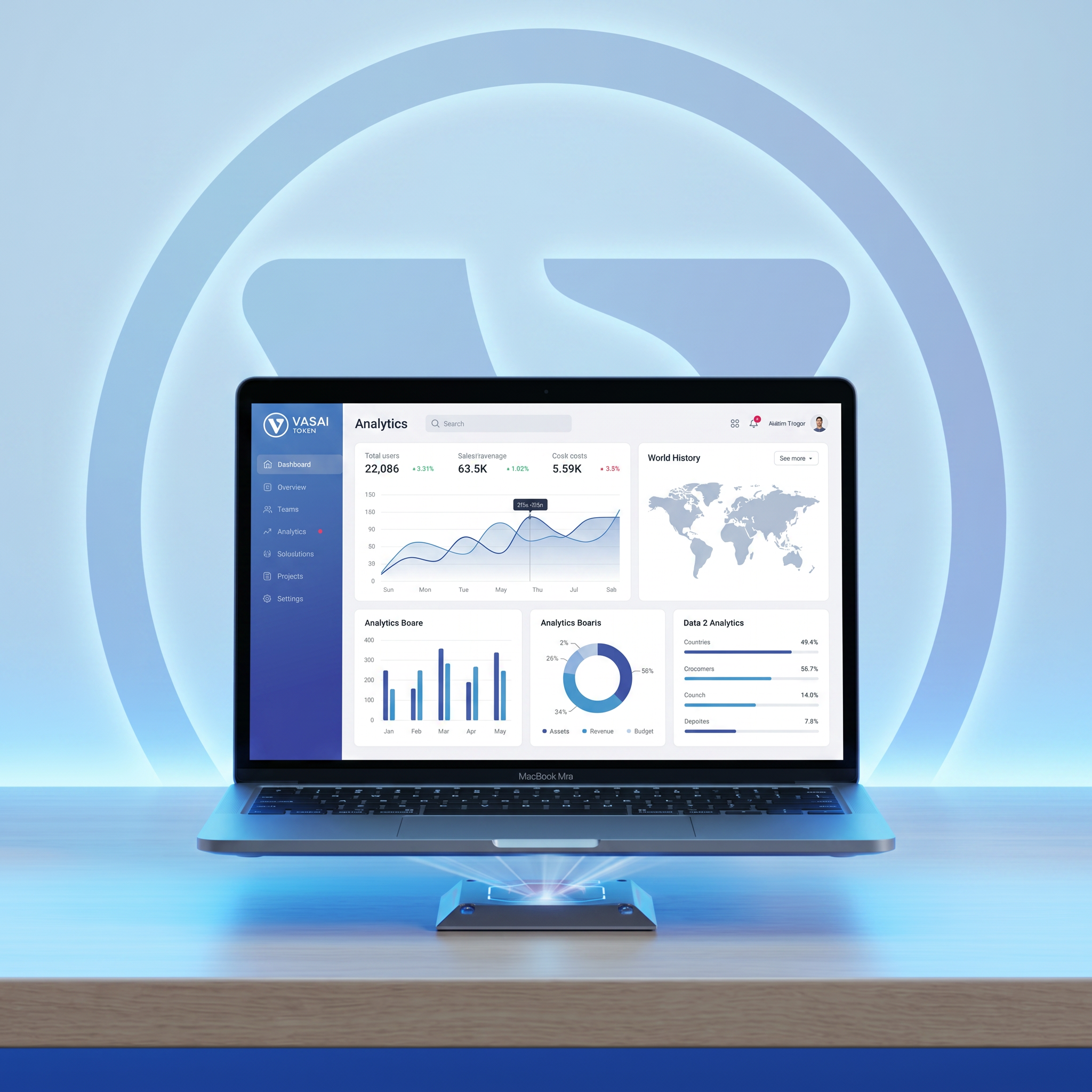
Image usage also supports recognition. The VAI icon appears as the favicon and navigation mark. The full logo appears in brand identity sections. Dashboard visuals support infrastructure themes. Global visuals support capital intelligence themes. Utility visuals support token communication. Each image strengthens the content instead of being placed randomly.
GitHub Pages and static website discoverability
GitHub Pages is a practical hosting option for a static website because it supports simple deployment with HTML, CSS, JavaScript, images, sitemap files, and robots instructions. For VASAI Token, this means the entire public website can run without a backend. The important requirement is that every file path, link, image reference, and metadata field must be correct.
A sitemap.xml file helps list the main website URLs. A robots.txt file can point search engines toward the sitemap. For VASAI Token, these files should include the domain https://VASAIToken.github.io and the important pages: index, about, insights, five articles, FAQ, and contact. This supports discoverability and makes the static site more complete.
Because GitHub Pages is static, the website should avoid features that require server-side processing. The contact form can be presented visually, but live submissions require an external form service if needed. This distinction is important because VASAI Token should keep its front-end experience honest, clean, and technically appropriate for the platform.
How VASAI Token can support future GEO-style discovery
Search behavior is evolving. Users increasingly ask natural questions through search engines and AI systems. This makes clear, answer-focused content more important. VASAI Token can support future GEO-style discovery by writing pages that answer direct questions, explain entities clearly, and use consistent terminology. A website that only uses vague promotional language may be harder for systems to summarize accurately.
The VASAI Token content system supports this by defining the brand repeatedly in natural language. The homepage introduces what VASAI Token is. The About page explains the mission and identity. Articles explain specific themes. FAQ answers provide direct responses. Contact information adds public reference points. Together, these pages make the entity easier to parse.
Good GEO-style content is not only about adding more keywords. It is about making the site easier to understand. VASAI Token benefits when each page answers a clear question: What is the project? What is its utility? How does AI fit the narrative? Why does visibility matter? How can someone contact the brand? These answers help both users and discovery systems.
Conclusion: visibility begins with structure
VASAI Token visibility begins with structure. A complete website gives users and search systems more to understand. The combination of clear metadata, long-form articles, internal links, FAQ answers, image alt text, sitemap files, and consistent UI helps the project create a stronger public web presence.
This article has shown that visibility is not a single tactic. It is the result of many connected parts: content depth, page organization, design consistency, technical correctness, and user-friendly navigation. VASAI Token can use these parts to present itself as a more complete digital asset brand in a search-driven environment.
The next article will complete the VASAI Token Insights series by exploring future positioning. It will explain how VASAI Token can evolve from a basic token website into a broader intelligence brand platform with scalable content, consistent visuals, and deeper public communication.